


What Is Akash (AKT): How It Enables Low-Cost Cloud Compute for AI and Developers
What is Akash (AKT)? Rooted in the idea of open and permissionless infrastructure, Akash (AKT) connects traditional cloud computing with decentralized networks in the DePIN sector. It uses blockchain to enable users to rent and supply compute resources globally, reducing reliance on centralized providers.
Backed by a network of validators, compute providers, and developers, Akash (AKT) functions as more than a token—it powers decentralized cloud deployment and GPU marketplaces for AI and Web3 workloads.
Through this article, we explore Akash (AKT), its infrastructure model, and its role in the growing demand for decentralized compute.
Use a secure, non-custodial option like Bitget Wallet to access AKT and interact with on-chain infrastructure seamlessly.
Key Takeaways
- Akash (AKT) operates as a decentralized cloud marketplace, enabling users to access GPU and CPU resources without relying on centralized providers
- Its value is tied to real compute demand, positioning it within the “picks-and-shovels” narrative of AI infrastructure growth
- Adoption, network usage, and token economics (like burn mechanisms) are key factors influencing AKT’s long-term viability
What Is Akash (AKT): What You Should Know?
Akash (AKT) is a DePIN infrastructure token based on the Cosmos network that represents a decentralized alternative to traditional cloud computing. The project embodies the following values:
- Open compute access: Anyone can buy or sell cloud resources globally
- Cost efficiency: Market-driven pricing through reverse auctions
- Permissionless infrastructure: No reliance on centralized cloud providers
Akash (AKT) not only reflects the shift toward decentralized systems but also applies it to cloud computing and AI infrastructure, helping build a more accessible and competitive compute economy.
Learn more: All You Need To Know About DePIN, DePIN: Hardware Set to Transform Web3
Source: X
Recent developments around Akash Network highlight growing real-world adoption in decentralized AI infrastructure. The network has been used by multiple projects to deploy privacy-focused AI systems and autonomous agent frameworks on its distributed GPU marketplace, reinforcing its role as a functional alternative to centralized cloud providers. This continued integration into live AI use cases supports the broader narrative that decentralized compute networks like Akash are gaining traction as demand for scalable GPU resources increases.
Akash (AKT) Listing Details and Launch Date
Key Listing Information
Here are the important details about the Akash (AKT) listing:
- Exchange: KuCoin
- Trading Pair: AKT/USDT
- Deposit Available: May 7, 2022
- Trading Start: May 7, 2022, 08:00 UTC
- Withdrawal Available: May 7, 2022, 10:00 UTC
Don’t miss your chance to start trading Akash (AKT) on exchanges and be part of this infrastructure-driven crypto sector.
- Please refer to the official announcement for the most accurate schedule.
Which Is Better: Crypto Exchange or Crypto Wallet Trading?
If you want full control of your assets and maximum earning power, choose Bitget Wallet. Unlike crypto exchanges where funds remain in custody, Bitget Wallet is self-custodial, giving you security, privacy, and direct access to DeFi.
Bitget Wallet Key Advantages:
✅ Stablecoin Earn Plus: Earn up to 18% APY on your holdings
✅ Zero-fee trading on memecoins and RWA U.S. stock tokens
✅ Crypto card with Mastercard & Visa: Spend globally with zero fees
Add to that instant cross-chain swaps across Solana, Ethereum, and BNB, and you’ll see why many users combine both worlds — trading early and fee-free with Bitget Wallet, then using CEXs for bulk orders.
👉 For autonomy, yield, and zero fees, Bitget Wallet gives you the edge.
Akash (AKT) Market Trends & Price Predictions 2026
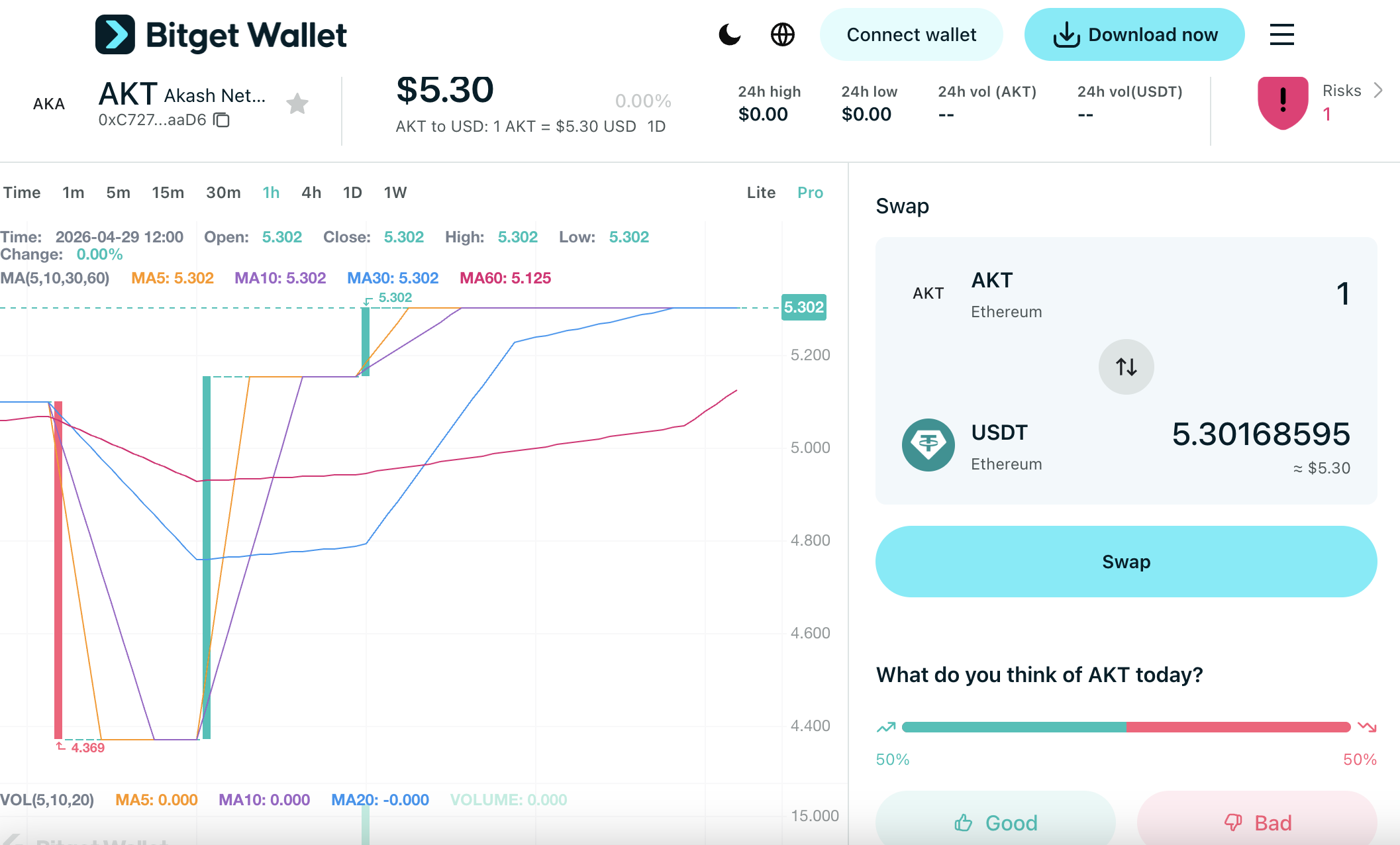
Akash (AKT)’s price is driven by AI compute demand, DePIN sector momentum, and real network usage. As a decentralized cloud infrastructure token, AKT typically trades in correlation with broader AI and infrastructure narratives rather than pure speculation. Based on current market structure and historical volatility, AKT could fluctuate within the $0.40–$1.20 range in 2026. If adoption of decentralized GPU marketplaces accelerates and on-chain usage strengthens, a longer-term upside toward $2.00–$3.00 remains possible under favorable conditions.
Factors Influencing the Price of Akash (AKT)
Several crucial aspects contribute to the growth potential of Akash (AKT):
- Market Trends: AKT is highly sensitive to AI and DePIN narratives. Capital rotation into “picks-and-shovels” infrastructure tokens often drives short-term price spikes.
- Adoption & Real-World Utility: Growth in GPU deployments, active leases, and real compute demand directly impacts token value, especially with usage-linked token models.
- Project Advancements: Upgrades such as the burn-mint equilibrium (BME) mechanism strengthen tokenomics by linking network usage to supply dynamics.
Long-Term Growth Potential
If Akash (AKT) continues expanding within decentralized cloud computing and AI infrastructure, increasing demand for low-cost GPU resources could support higher valuations over time. However, its long-term trajectory depends on sustained developer adoption and its ability to compete with centralized cloud providers. Market volatility, regulatory shifts, and infrastructure execution risks should also be carefully considered.
Source: CoinGecko, CoinMarketCap
Source: Bitget Wallet
Why Akash (AKT) Stands Out: Essential Features
The standout features of Akash (AKT) include:
- Decentralized Cloud Marketplace Akash enables users to rent and provide compute resources through an open marketplace. Instead of fixed pricing, providers compete via reverse auctions, allowing developers to secure lower-cost infrastructure without relying on centralized cloud vendors.
- GPU Access for AI Workloads The network supports high-demand GPU resources used in AI training, inference, and data processing. This positions Akash within the infrastructure layer of the AI economy, where demand is driven by real compute needs rather than narrative alone.
- Usage-Linked Token Model Akash integrates mechanisms like burn-mint equilibrium (BME), connecting network usage with token supply dynamics. As deployments increase, this structure aims to align activity on the network with long-term token behavior.
How Akash (AKT) Operates and What Benefits It Delivers?
Akash (AKT) runs on a Cosmos-based architecture designed to support distributed cloud services, enabling users to deploy workloads by matching demand with global compute supply. Instead of relying on fixed pricing models, it uses a marketplace system where providers compete to offer resources, improving cost efficiency and accessibility.
Key Technological Components
- Blockchain Network: Built within the Cosmos ecosystem, Akash operates as an independent Layer 1 using the Cosmos SDK. This structure allows fast settlement, low transaction costs, and interoperability with other Cosmos-based chains via IBC.
- Consensus Mechanism: The protocol uses Tendermint Proof-of-Stake (PoS), where validators secure the chain and process transactions. This design ensures high throughput while maintaining network security through staking participation.
- Smart Contracts: Deployment agreements between users and providers are executed through on-chain lease contracts. These define pricing, duration, and service conditions, enabling automated and trust-minimized resource allocation.
- Scalability Solutions: Akash scales through its distributed provider model, where additional compute capacity can be added by new participants. Combined with off-chain workload execution and on-chain coordination, this approach supports flexible expansion without congestion issues.
Akash (AKT) Team: Leadership and Strategic Vision
The Team
- Led by: Greg Osuri, founder of Overclock Labs, with a background in cloud infrastructure and distributed systems
- Mission: Beyond issuing a token, the team aims to build an open cloud economy where compute resources are accessible, competitive, and not controlled by centralized providers
The Vision
- Core Focus: Creating a permissionless marketplace for cloud services, enabling developers to deploy applications without vendor lock-in while reducing infrastructure costs
- Long-Term Goal: Positioning Akash as a foundational layer for AI workloads, Web3 applications, and distributed computing across the global cloud industry
Partnerships
- Strategic Collaborations: Integration within the Cosmos ecosystem and support from infrastructure and validator networks contributing compute and security
- Expansion Plans: Extending into AI-focused GPU markets, decentralized hosting, and broader enterprise-grade infrastructure use cases.
Key Use Cases of Akash (AKT): How It’s Transforming Cloud Computing
Akash (AKT) serves a variety of purposes, including:
- AI Model Training and Inference Developers can deploy GPU-intensive workloads such as model training and inference without relying on centralized cloud providers, reducing costs while maintaining flexibility.
- Decentralized Application Hosting Projects can run Web3 apps, APIs, and backend services on distributed infrastructure, avoiding vendor lock-in and improving resilience.
- Monetizing Idle Compute Resources Individuals and data centers can lease unused CPU and GPU capacity, turning dormant hardware into a revenue-generating asset.
These applications highlight the practical value of $AKT in the cloud computing and AI infrastructure sector.
Akash (AKT) Roadmap Explained: What’s Coming Next?
The roadmap for Akash (AKT) reflects ongoing development in decentralized cloud infrastructure and GPU marketplaces:
| Quarter | Roadmap |
| Q1 2026 | Expansion of GPU marketplace offerings and improvements in deployment tooling for AI workloads |
| Q2 2026 | Enhancements to pricing mechanisms and optimization of provider onboarding to increase available capacity |
| Q3 2026 | Integration upgrades within the Cosmos ecosystem and improvements to cross-chain interoperability |
| Q4 2026 | Continued scaling of enterprise-ready features, focusing on reliability, uptime, and broader adoption |
These developments highlight the evolving role of $AKT in decentralized cloud computing and AI infrastructure, where growth depends on expanding supply, improving usability, and increasing real-world deployment.
How to Buy Akash (AKT) on Bitget Wallet?
Trading Akash (AKT) is easy on Bitget Wallet. Follow these simple steps to get started:
Step 1: Create an Account
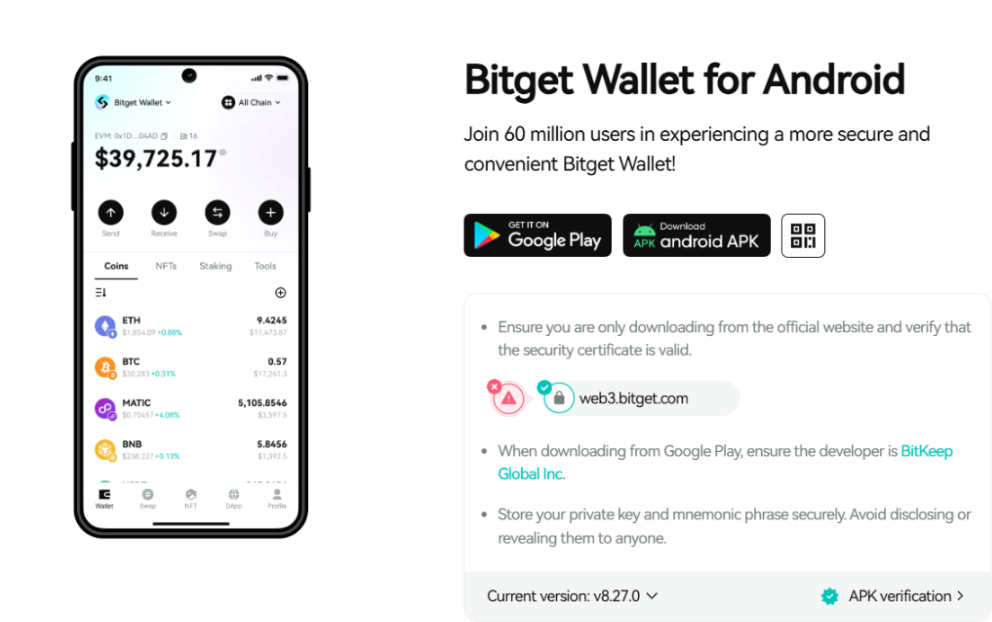
If you don't have an account, download the Bitget Wallet app. Sign up by providing the necessary information and verifying your identity.
Step 2: Deposit Funds
Once your account is set up, you need to deposit funds. You can do this by:
- Transferring Cryptocurrency: Send crypto from another wallet.
- Buying Crypto: Use a credit or debit card to purchase crypto directly on Bitget Wallet, ensuring you have enough funds for trading Akash (AKT).
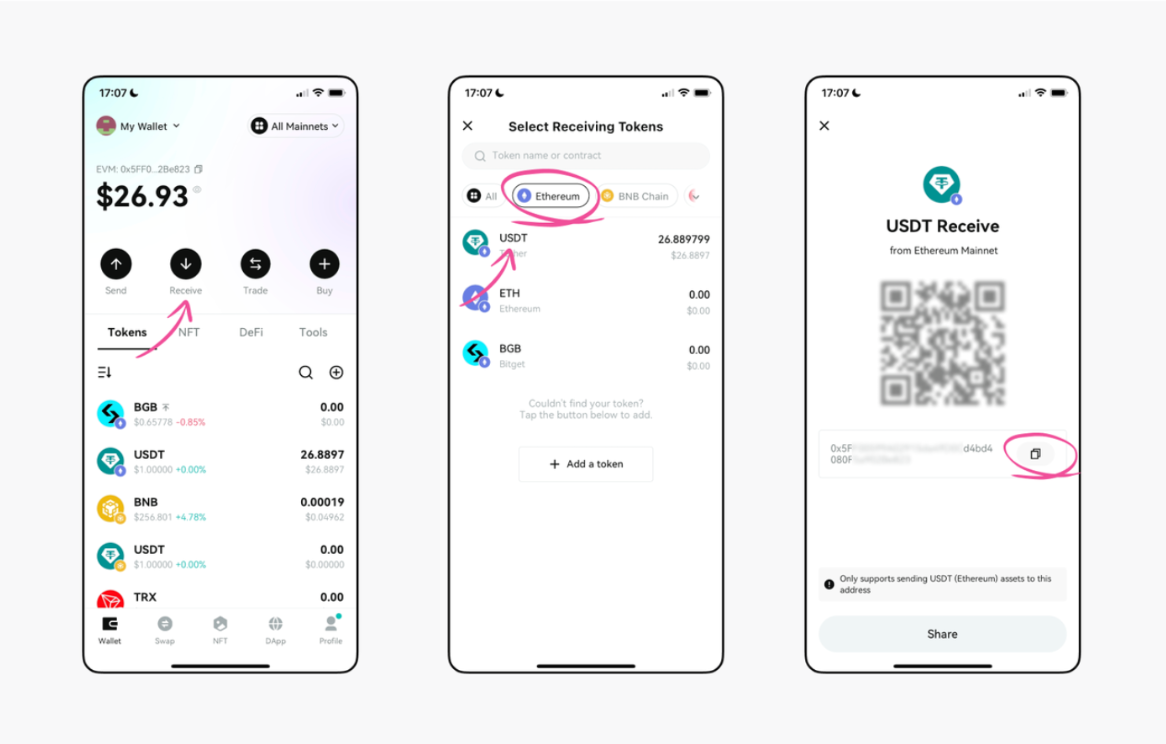
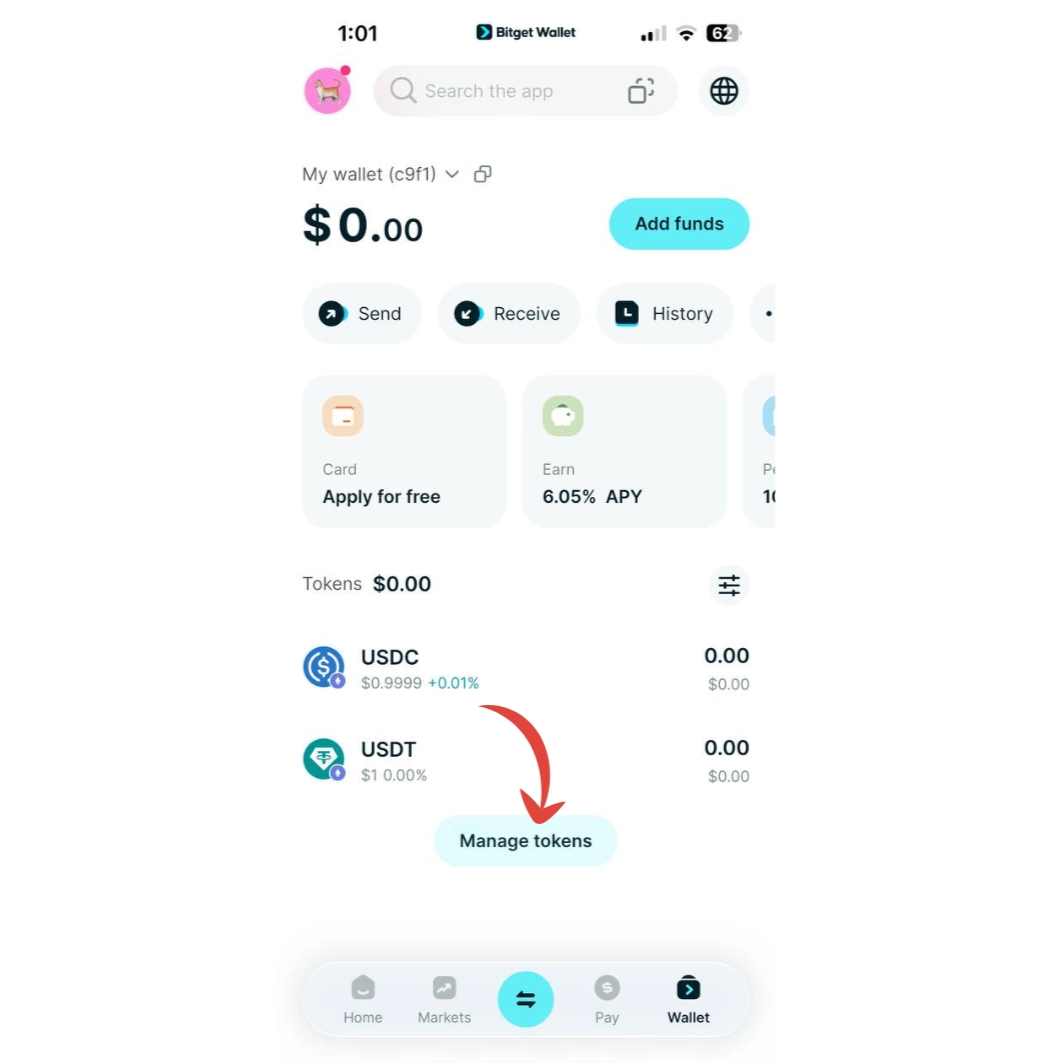
Step 3: Find Akash (AKT)
In the Bitget Wallet interface, navigate to the market section. Use the search bar to find Akash (AKT). Click on the token to view its trading page.
Since this token has not been listed yet, please refer to the final contract address provided by the project team after the token is officially listed.
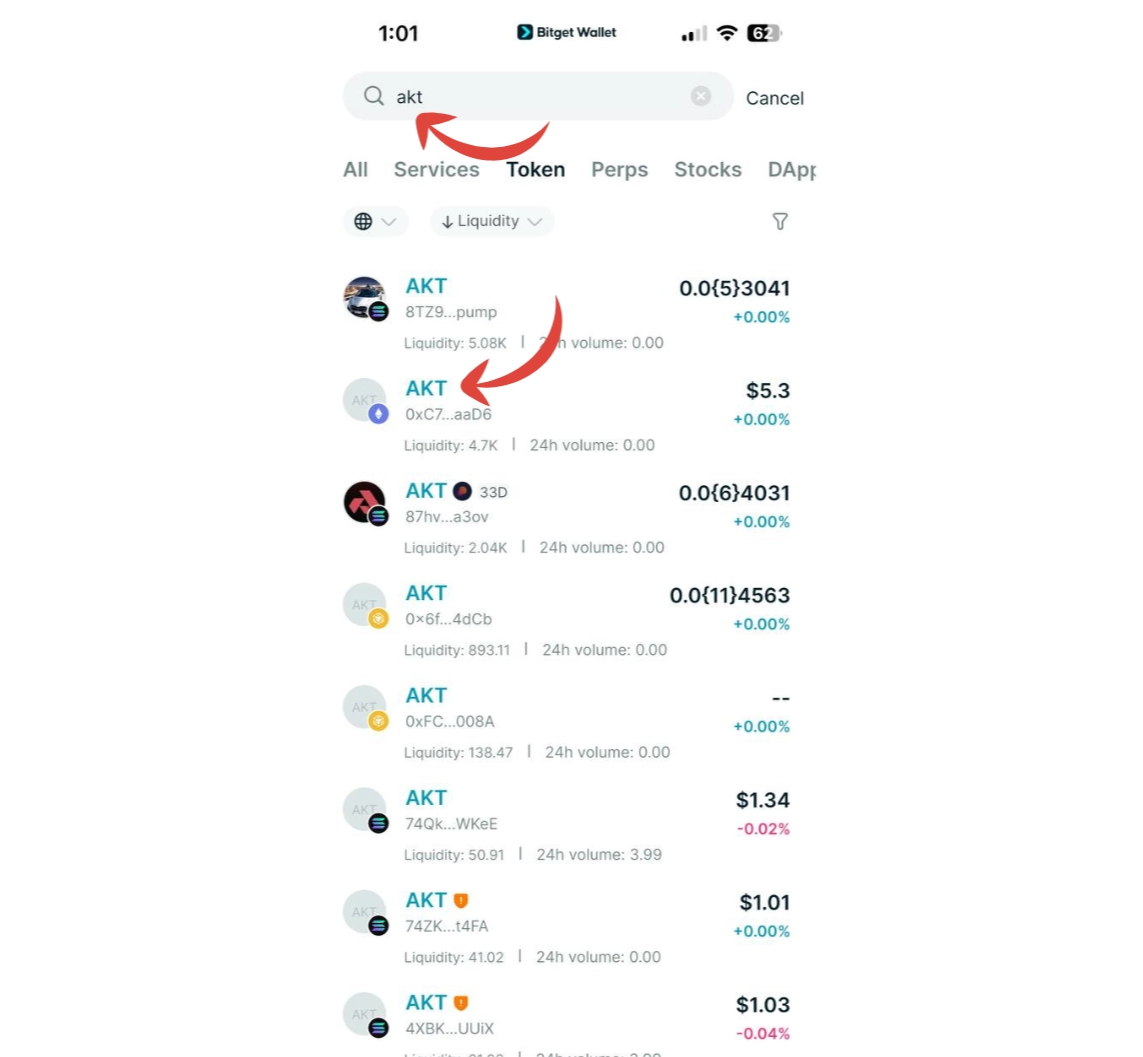
Step 4: Choose Your Trading Pair
Select the trading pair you wish to use, such as AKT/USDT. This will allow you to trade Akash (AKT) against USDT or another cryptocurrency.
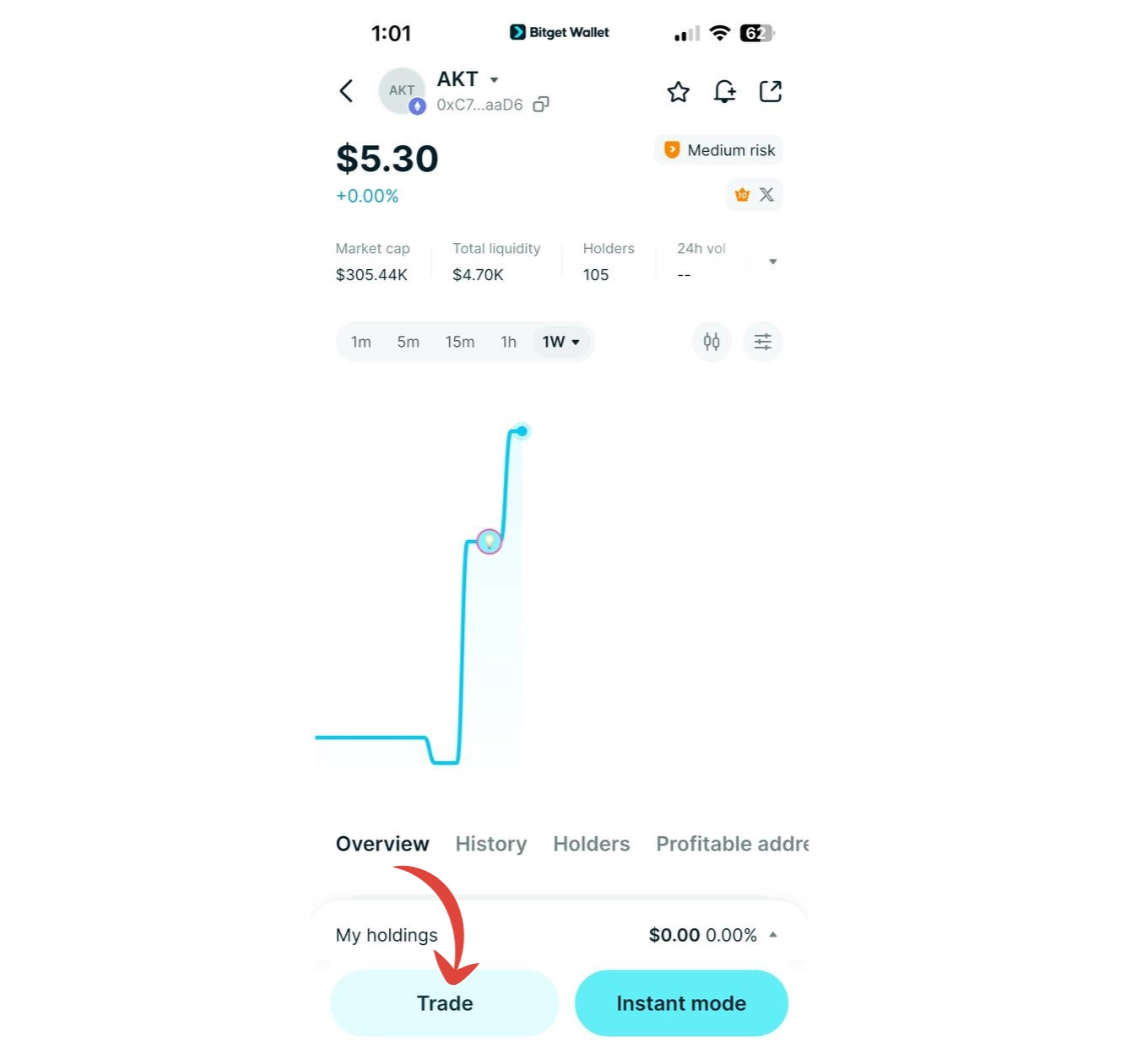
Step 5: Place Your Order
Decide whether you want to place a market order (buy/sell at the current market price) or a limit order (set your own price). Enter the amount of Akash (AKT) you wish to buy or sell, then confirm your order.
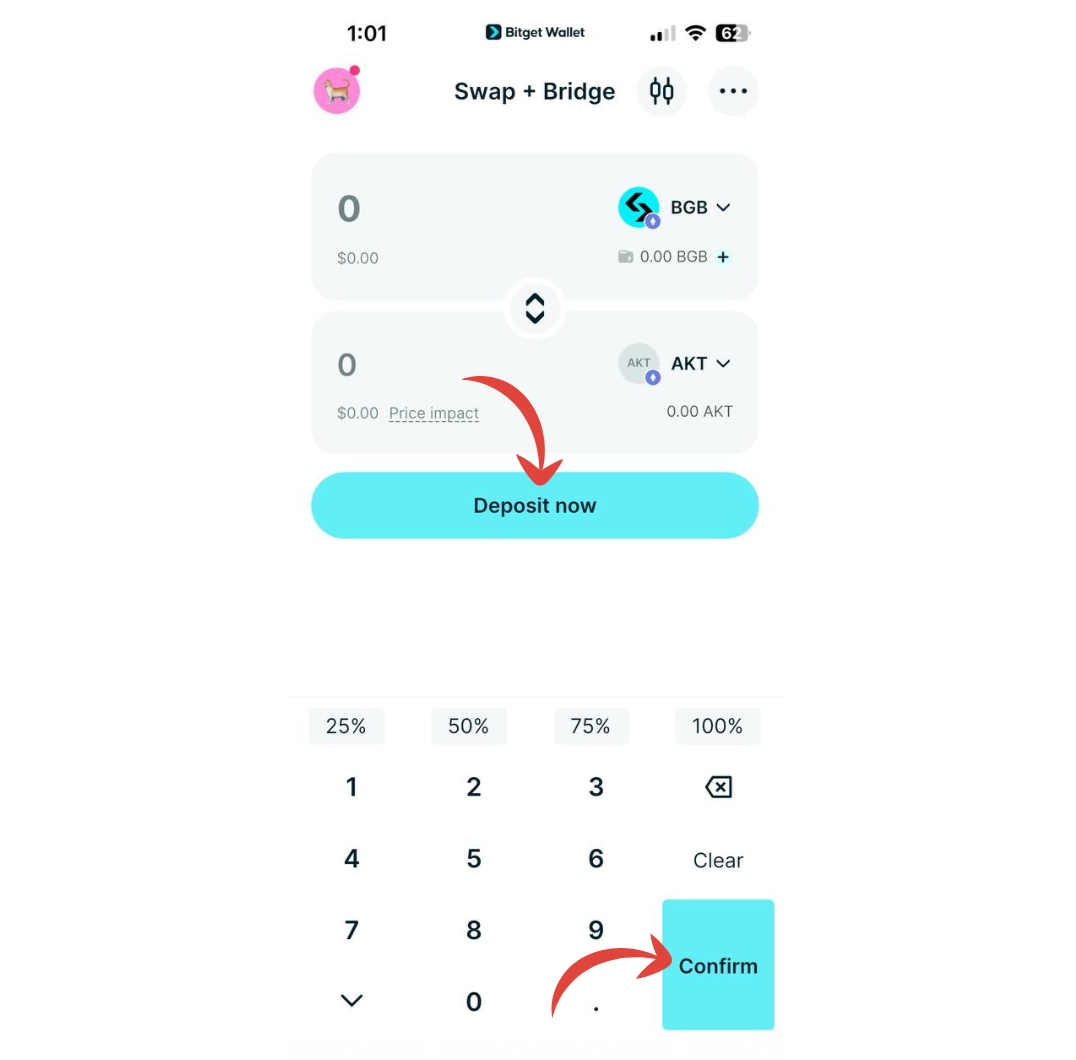
Step 6: Monitor Your Trade
After placing your order, you can monitor its status in the “Open Orders” section. Once the order is executed, you can check your balance to see your newly acquired Akash (AKT).
Step 7: Withdraw Your Funds (Optional)
If you wish to transfer your Akash (AKT) or any other cryptocurrency to another wallet, navigate to the withdrawal section, enter your wallet address, and confirm the transaction.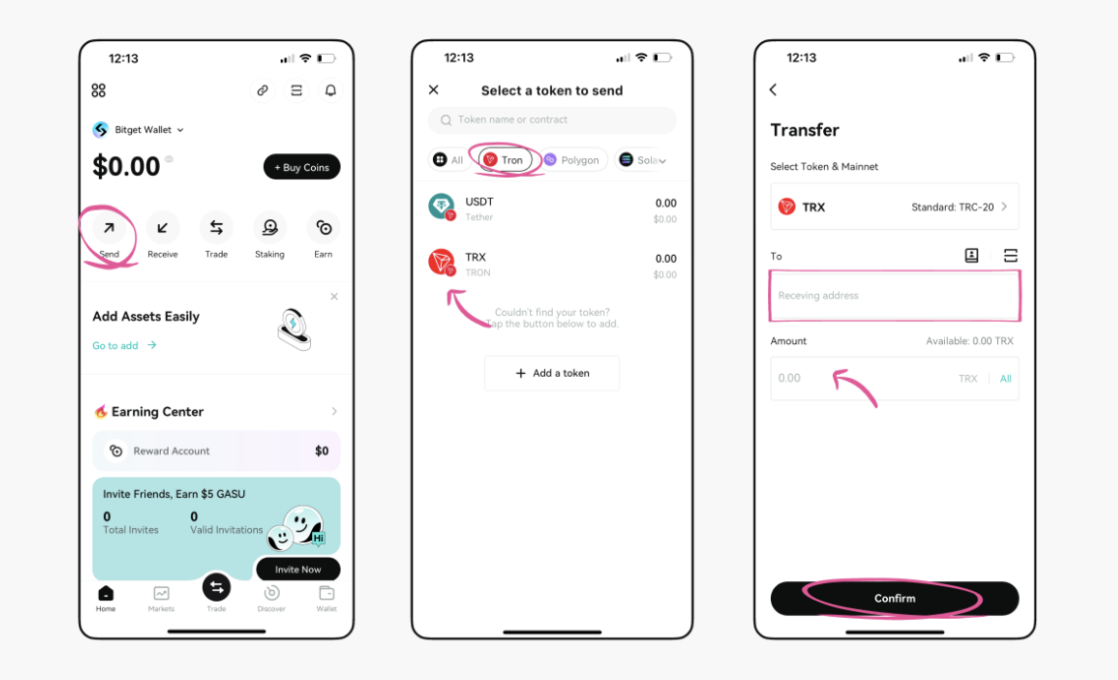
Conclusion
Akash (AKT) represents a shift toward open cloud infrastructure, where compute resources are no longer controlled by a few centralized providers but distributed across a global marketplace. As demand for AI workloads and scalable processing continues to grow, platforms like Akash offer a practical alternative by lowering costs and improving accessibility. Its role within the DePIN sector highlights how infrastructure-focused tokens can capture value from real usage rather than short-term narratives.
Using Bitget Wallet to access AKT allows users to interact directly with on-chain markets while maintaining full control of their assets. With features like multi-chain support, seamless swaps, and self-custody security, it provides a more flexible way to manage and trade tokens like AKT. For users looking to engage with decentralized infrastructure efficiently, Bitget Wallet offers both convenience and control in a single platform.
Take full control of your crypto—use Bitget Wallet to access AKT instantly, swap across chains, and trade without limits.
Sign up Bitget Wallet now - grab your $2 bonus!
FAQs
1. What is Akash (AKT) and how does it work?
Akash (AKT) is a decentralized cloud computing protocol that connects users who need compute resources with providers offering unused capacity. It uses a marketplace model where pricing is determined through competition rather than fixed contracts.
2. How to buy Akash (AKT) safely?
To buy Akash (AKT) safely, use a trusted platform or a non-custodial wallet like Bitget Wallet, verify the correct network (Cosmos), and avoid interacting with unofficial or fake token contracts.
3. Where can I buy Akash (AKT)?
Akash (AKT) is available on several centralized exchanges such as KuCoin, as well as through on-chain swaps using supported wallets that connect to Cosmos-based networks.
4. Do I need KYC to buy Akash (AKT)?
KYC is usually required when purchasing AKT through centralized exchanges. However, using a non-custodial wallet allows you to access on-chain markets without submitting personal identification, depending on the method used.
5. Is Akash (AKT) a high-risk investment?
Akash (AKT), like most infrastructure tokens, carries risk due to market volatility, adoption uncertainty, and competition from centralized cloud providers. Its performance depends on real usage growth rather than speculation alone.
Risk Disclosure
Please be aware that cryptocurrency trading involves high market risk. Bitget Wallet is not responsible for any trading losses incurred. Always perform your own research and trade responsibly.

 What Is Punkpeg (pPEG): A Stable Crypto Asset Designed for DeFi and Trading2026-04-28 | 5 mins
 How to Buy RAVE in 2026: A Beginner’s Step-by-Step Guide to RaveDAO2026-04-15 | 5 mins



