





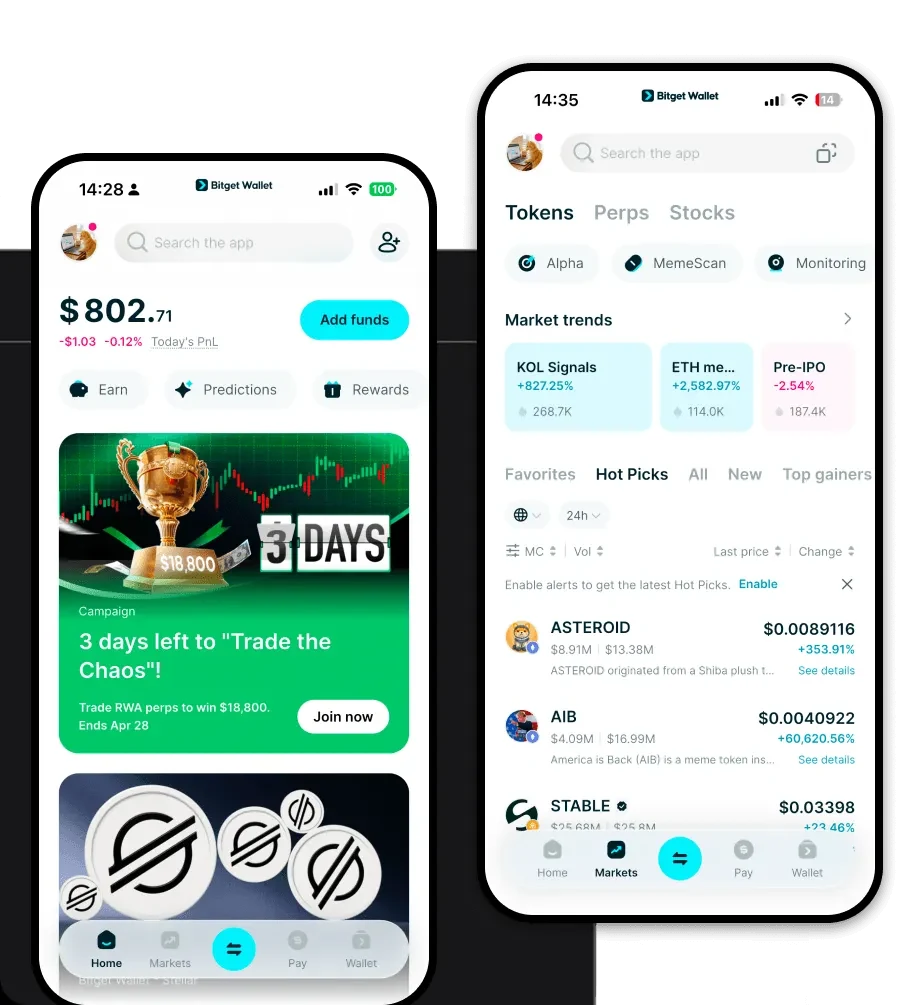
What is a dtsi Wallet?
A dtsi wallet is a digital interface designed to interact with the dtsi asset, which operates primarily on the EVM (Ethereum Virtual Machine) blockchain architecture. Because dtsi functions within an EVM-compatible environment, its wallet requirements center on seamless integration with Ethereum-based smart contracts and decentralized applications. As a digital asset supported by Bitget Wallet, a secure and reliable platform trusted by 40 million users for exploring Web3, managing assets, and facilitating crypto transactions, dtsi benefits from a robust infrastructure that prioritizes user control and technical reliability.
Download Bitget dtsi Wallet
Accessing your dtsi assets requires a wallet that balances ease of use with professional-grade security. Bitget Wallet offers a comprehensive solution that serves as your gateway to the DeFi ecosystem. Whether you are a mobile-first user or prefer desktop browser extensions, Bitget Wallet provides a unified experience across platforms. It supports self-custody, ensuring that you—and only you—hold the private keys to your digital assets. With support for over 130 public chains, it eliminates the need for multiple apps. To get started, you can download Bitget Wallet for iOS, Android, or as a browser extension to begin managing your dtsi portfolio immediately.
Why Choose Bitget dtsi Wallet?
- EVM Ecosystem Synergy: Bitget Wallet is built with deep EVM compatibility, ensuring that dtsi transactions are processed with optimal gas fee estimation and high-speed execution, which is critical for DeFi operations.
- Advanced Asset Custody: Your dtsi holdings are protected by a $300 million user protection fund, combining the benefits of a non-custodial wallet with institutional-grade security measures.
- Cross-Chain Interoperability: Beyond the native chain, the wallet features built-in cross-chain bridges, allowing you to move dtsi or associated assets across different networks without leaving the app.
- Deep DeFi Integration: The wallet acts as a portal to hundreds of decentralized exchanges, providing high liquidity support that ensures you can swap dtsi at the best available rates.
How to Create a dtsi Wallet
Setting up your wallet is a straightforward process designed for both newcomers and experienced traders:
- Download and Install: Visit the official Bitget Wallet website and install the application on your preferred device (mobile or browser).
- Create New Wallet: Open the app and select 'Create a Wallet'. You will be prompted to set a strong password for local encryption.
- Backup Your Seed Phrase: The app will generate a 12-word recovery phrase. Write this down on paper and store it offline; never share this with anyone, as it is the only way to recover your dtsi assets.
- Verify and Setup: Confirm your recovery phrase within the app to finalize the wallet creation.
- Import or Receive dtsi: Once the wallet is active, you can import existing addresses via private key or simply copy your public EVM address to receive dtsi tokens from exchanges or other wallets.
What Can You Do With a dtsi Wallet?
Using a dtsi wallet goes far beyond simple storage; it is an active tool for participating in the decentralized economy:
- Trading on Decentralized Exchanges: You can directly connect your Bitget Wallet to top-tier DEXs to trade dtsi without centralized intermediaries.
- Storing Assets in Non-Custodial Wallets: By keeping your dtsi in a non-custodial environment, you maintain full sovereignty over your funds, free from the risks associated with exchange insolvency.
- Participating in Liquidity Pools: You can utilize your dtsi to provide liquidity in DeFi protocols, earning yield and contributing to the stability of the ecosystem.
- Cross-Chain Asset Transfers: The wallet allows you to bridge dtsi across different EVM chains, maximizing your utility across various dApp ecosystems.
- Portfolio Management: Use the built-in tracking tools to monitor the performance of your dtsi holdings in real-time, visualizing your entire crypto net worth in one dashboard.
How dtsi Wallets Are Different from Other Crypto Wallets
Unlike simple storage applications, a dtsi wallet optimized for the EVM ecosystem focuses on transaction efficiency and smart contract interaction. Because dtsi operates on an account-based model (standard for EVM), the wallet must handle gas fees dynamically to ensure transactions are confirmed during network congestion. This differs significantly from UTXO-based wallets, which require different address management strategies. Bitget Wallet optimizes this by providing gas fee analytics, allowing you to time your dtsi transactions for lower costs. Furthermore, while some wallets are limited to a single chain, a dtsi-compatible wallet like Bitget integrates multi-chain support, ensuring that your dtsi assets are never isolated from the broader Web3 landscape.
